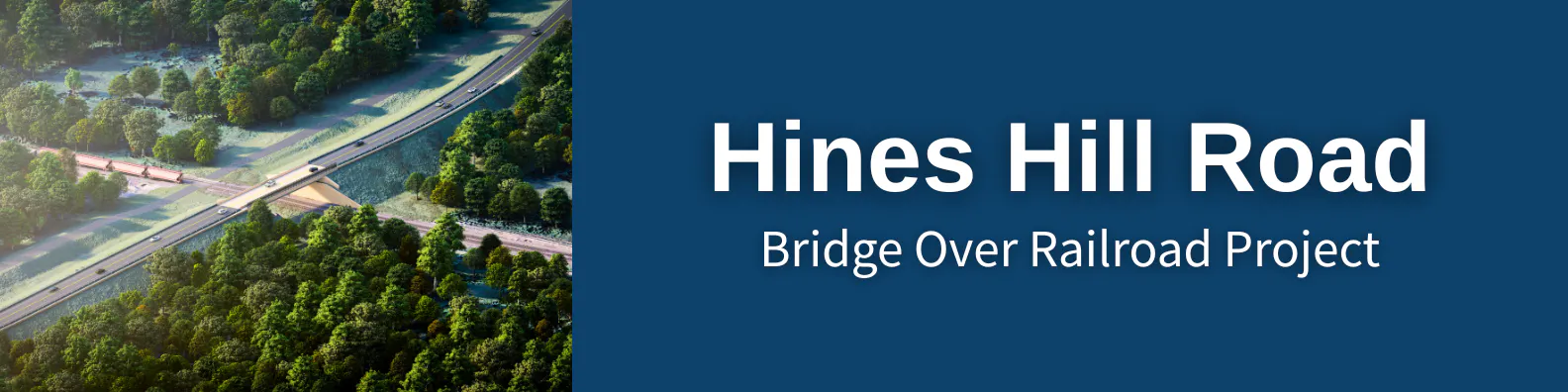
New Bridge Planned for Hines Hill Road Over Railroad
Project Overview
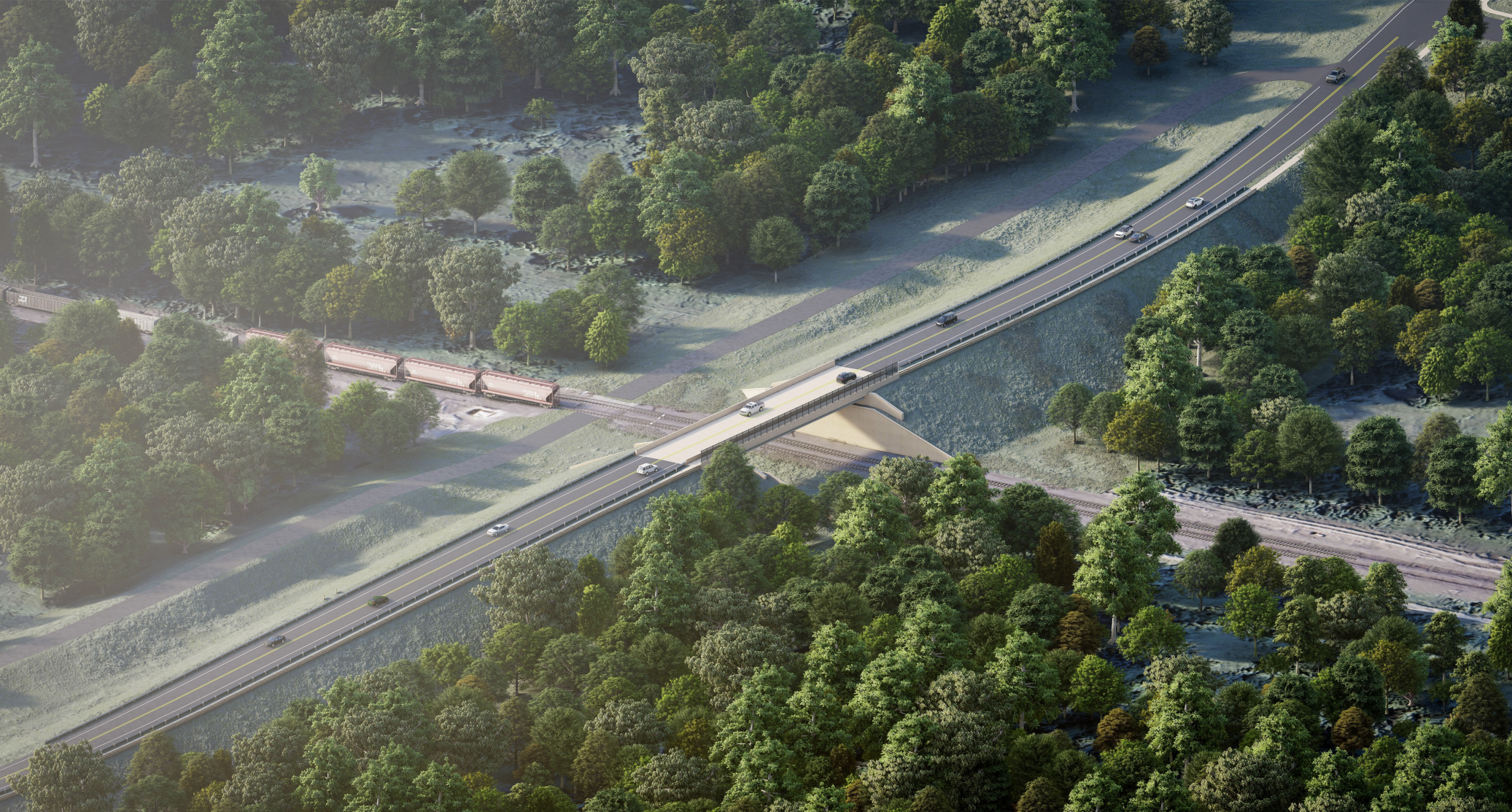
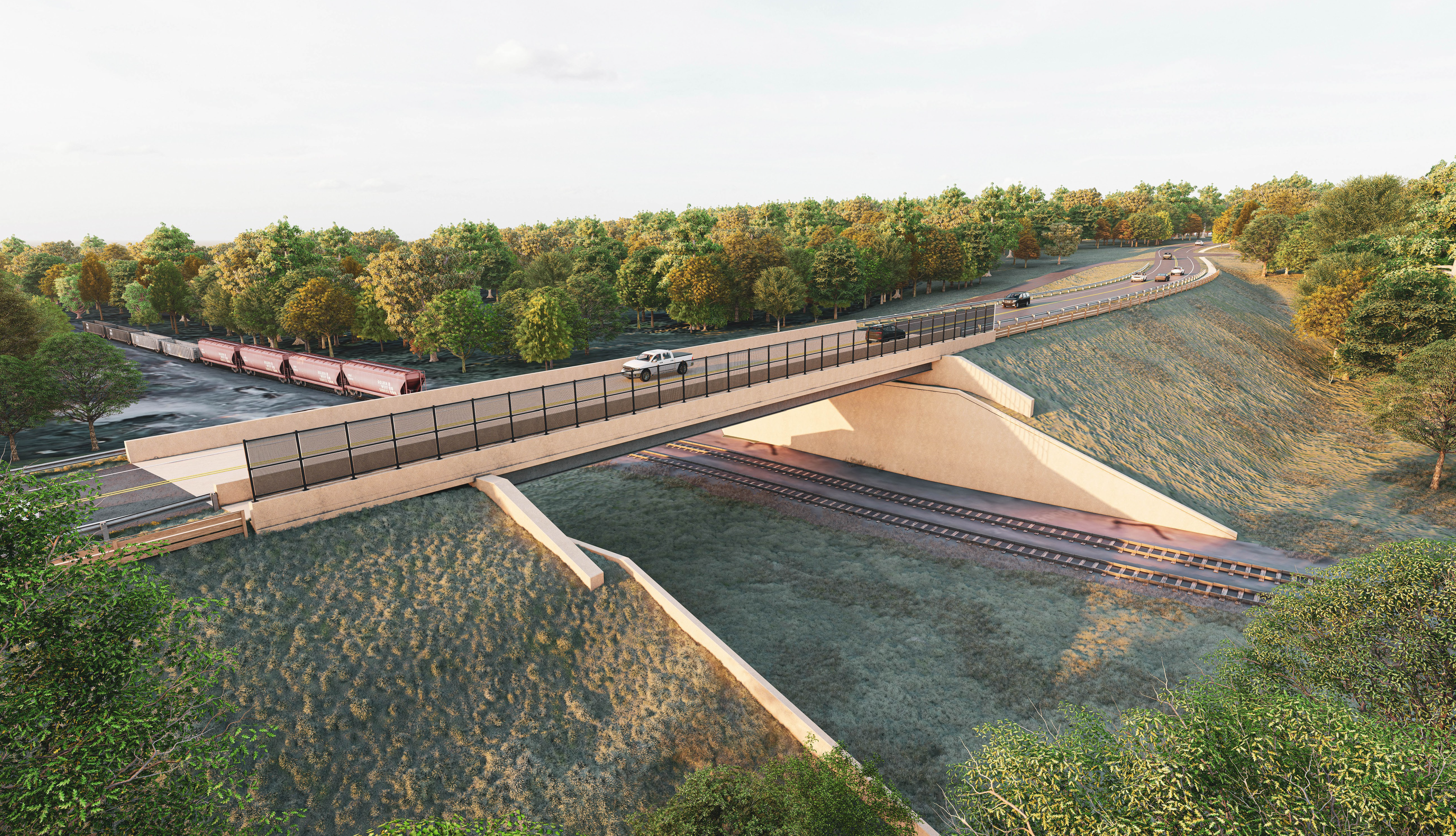
The City of Hudson, in partnership with the Ohio Rail Development Commission and the Ohio Department of Transportation, is advancing plans to construct a bridge over Hines Hill Road at the Norfolk Southern railroad crossing. The proposed bridge would carry traffic over the railroad tracks, eliminating the existing at-grade crossing and improving safety and traffic flow. Because the new bridge would be built alongside the current roadway, construction is expected to require shorter road closures and detours than if it were built in the existing road alignment. Construction is currently anticipated to begin in 2029.
Project Purpose and Necessity
The Hines Hill Road Railroad Bridge Project is designed to improve safety, reduce traffic delays and provide more reliable access for residents and emergency responders. Hines Hill Road crosses an active Norfolk Southern railroad corridor that carries approximately 50 to 60 trains each day. With nearly 4,500 vehicles using the roadway daily, the existing at-grade crossing can create traffic backups and presents the potential for train-vehicle collisions.
By replacing the at-grade crossing with a bridge over the railroad tracks, the project will eliminate conflicts between trains and vehicles, reduce delays caused by passing trains, and provide uninterrupted 24/7 access for emergency services traveling to and from the northwest quadrant of Hudson.
Alignment Evaluation and Selection
The project team evaluated three potential alignments for the new bridge:
- Existing Alignment – Constructing the bridge in the current roadway location.
- Northern Alignment – Shifting the roadway north of its current location.
- Southern Alignment – Shifting the roadway south of its current location.
One major goal during construction is to alleviate impacts to the traveling public that utilizes Hines Hill Road. Therefore, building the new road and bridge where the road is currently located is not feasible.
Further, the "northern" and "existing" alternatives were eliminated due to environmental and property directives. Lands situated northwest of the railroad crossing are designated under the Water Resource Restoration Sponsor Program as a wetland conservancy managed by the Western Reserve Land Conservancy. To alleviate any encroachment or construction impacts beyond the northern right-of-way line of Hines Hill Road, all northern and existing centerline alternatives were removed from consideration.
Therefore, the alternatives study focused on two "southern" alternative variations, designated as Option B3 and Option B4, which differ primarily on the eastern side of the railroad tracks:
• Option B3 was selected as the recommended alternative for the project. Although it requires a small amount of property acquisition from the edge of the historic Ward House property, it provides significant operational advantages. Option B3 positions the new approach embankment entirely clear of the current roadway. This allows existing Hines Hill Road to stay open to manage local traffic and utility drives during construction without building a temporary road. It also permits immediate closure of the ground-level crossing allowing adjacent cell tower, railroad and gas well facilities the ability to maintain direct access via the preserved local road segments.
• Option B4 was designed to successfully avoided land acquisition from a historic parcel and its eastern embankment would completely bury the existing roadbed. This footprint required building an expensive, temporary detour road offset to the north and east, which generated temporary acquisition of property and mandated keeping the dangerous at-grade crossing active during construction to maintain gas well utility access.
Proposed Technical Design
Engineering and architectural design for the project is being completed by GPD Group. Based on structure type evaluations, the selected bridge layout and southern road realignment will accommodate two existing Norfolk Southern mainlines plus one future track. To further reduce construction footprints, lower expenditures and minimize impacts to the adjacent historic property, the engineering design was updated to reflect an Urban Collector classification with a 35 MPH design speed, down from the original 50 MPH rural standard.
Multi-modal safety and connectivity are also components of this design. The project plans incorporate a 10-foot sidewalk along the south side of Hines Hill Road. On the bridge section, this 10-foot sidewalk is physically separated from vehicular traffic by a concrete barrier wall. In addition, the design includes 5-foot paved berms on both sides of the roadway.
Environmental Impacts
Seven low and medium quality wetlands and two small streams will be impacted from project construction requiring appropriate permits to be obtained from resource agencies. Approximately 6.5 acres of trees with habitat for bats will be removed. Trees in the project limits will be cleared between October and April while bats are hibernating to avoid impacting protected species of bats.
Investigations into cultural resources were made to avoid and minimize impacts to a nearby property. Archaeological investigations did not find any important resources.
Other environmental studies completed for the project included a traffic noise analysis, which concluded that noise abatement measures are not warranted, and a review of historic sources of contamination, such as spills and hazardous waste, that did not reveal any concerns. The project does not involve impacts to floodplains, farmland and drinking water resources and will not have a negative effect on air quality.
Property Acquisition
Land owned by the City of Hudson and Norfolk Southern Railroad will be acquired for project construction. Minor amounts of land from two private properties will also be needed. Affected property owners will be contacted in 2027 regarding property acquisition.
Funding Breakdown
The total estimated cost for the project is $19,500,000. Funding is distributed across federal, state, local and private sources:
• Federal Railroad Administration Grant: $13,705,000
• Ohio Rail Development Commission Match: $2,860,000
• City of Hudson Local Match: $2,860,000
• Norfolk Southern Railroad Contribution: $75,000
Project Timeline and Administration
While preliminary development concepts originated as early as 2004, major recent milestones include the authorization of the final engineering design contract by Hudson City Council in October 2024, followed by the execution of the state grant agreement in March 2025. In March 2026, City Council authorized a Local Public Agency agreement with the Ohio Department of Transportation to transition the project toward construction.
Construction is expected to start in 2029. The federal grant performance period runs through August 31, 2031, and the state grant agreement requires physical construction to be completed by October 31, 2031.
The City of Hudson will administer the construction bidding process locally using ODOT-prequalified contractors, ensuring compliance with state and federal labor laws, prevailing wage schedules and Buy America material standards.
More information coming soon
-
 Hines Hill Road Bridge - Public Meeting Handout (737 KB) (pdf)
-
Hines Hill Road Bridge - Public Comment Sheet (256 KB) (pdf)
-
Environmental Cultural Resources Map (4.9 MB) (pdf)
-
Hines Hill Road Site Plan Renderings (13.5 MB) (pdf)
-
Schematic Overview (1.53 MB) (pdf)
-
Hines Hill Road Second Supplemental Bridge Report - June 2026 (4.31 MB) (pdf)
-
Hines Hill Road Stage 1 Site Plans - June 2026 (17.4 MB) (pdf)
-
Hines Hill Road Alternative Alignments Rendering (4.63 MB) (pdf)
-
Hines Hill Road Supplemental Structure Type Study - July 2025 (2.3 MB) (pdf)
-
Addendum to Preliminary Engineering Study - July 2025 (3.83 MB) (pdf)
-
Preliminary Engineering Study - Nov 2011 (44.9 MB) (pdf)

-

Phone 330-342-1770 Email engineering@hudson.oh.us -
JS
Phone (330) 342-1770 Email jszalay@hudson.oh.us